Nutritious Reading
American book culture could stand the same scrutiny as American food culture.
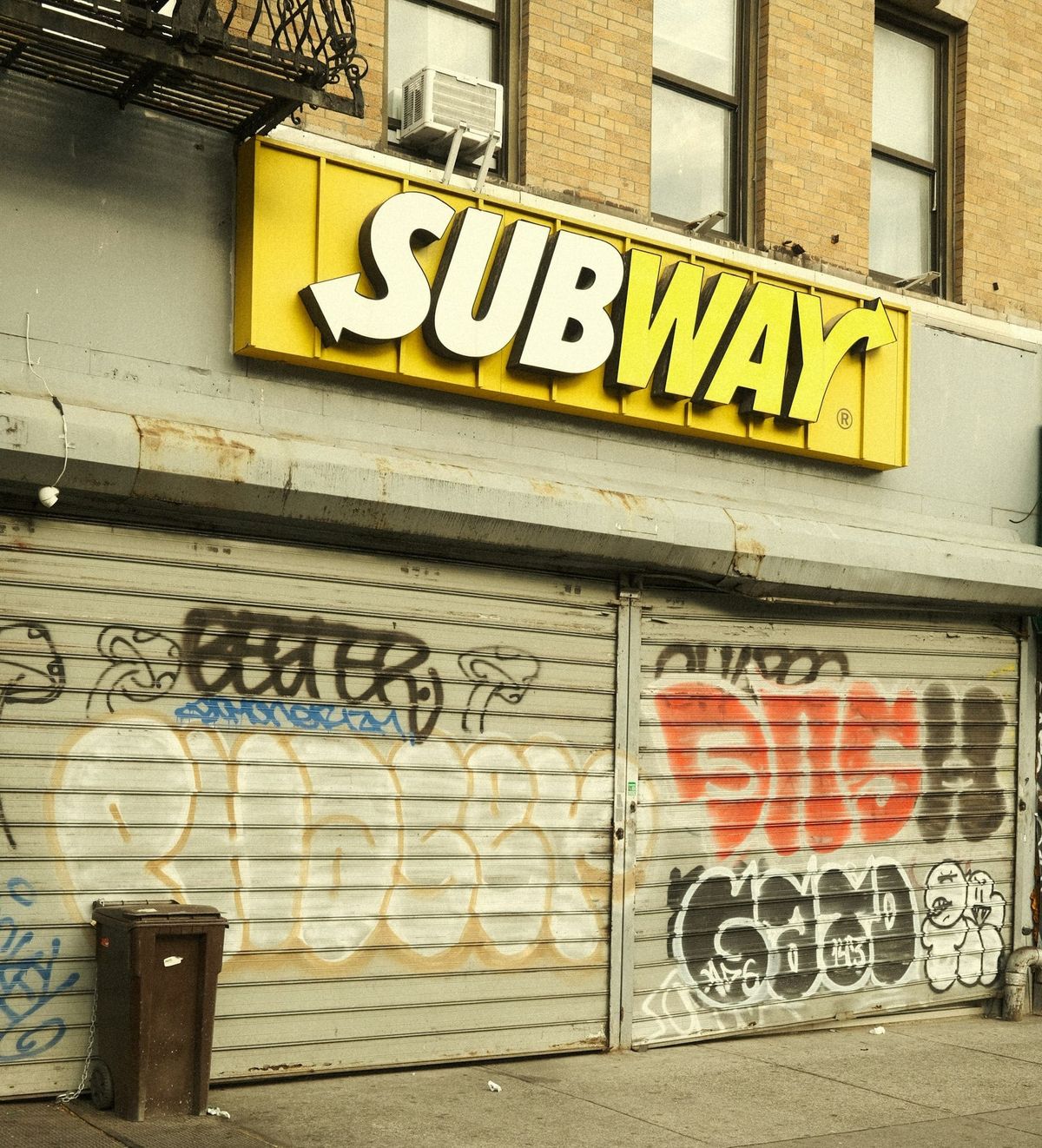
The argument against "less is more" – that is, the idea that quality is measured by elegance – has always been that no, "more is more." Elegance in the micro is never preferable for competency in the macro. That attitude has a long history in America, and increasingly the west, dominated by American media. We delight in scale. We drive big trucks, own big houses, eat huge meals. Yet perfection and scale are not the only two things to which one can aspire. In a universe of infinite possibility, we can choose to aspire to "high quality, as big a scale as reasonable." One need only value nuance a bit to open this path.
The USDA defines a food desert as an area "with limited access to affordable and nutritious food. [1] " That is, an area where food is healthy, not simply available. Americans are simply not struggling for calories. Instead, we are struggling for nutrition. A poor family with access only to McDonalds and Wendys will survive, but not thrive. Here we can see that middle path: having mastered scale (surviving, calories), we turn our attention to higher-order concerns (thriving, health). And nobody is trying to give every neighborhood their own government-run French Laundry [2] . Few would make the argument any longer that "at least poor families are eating!" Everyone, even the homeless, can typically afford something on the Dollar Menu with relatively little work. We all know that modern hunger is a crisis of distribution, not one of production.
Here I fear I will admit to the sin of reasoning by metaphor. When it comes to written media, I fear our society is fighting a rear-guard action against deliberate ignorance, bearing the same argument of "at least they're reading." Sparked by Harry Potter, fueled by Twilight, and now flamed by books like A Court of Thorns and Roses, many of the west's most popular books are simply un-aspirational. They are characterized merely by popularity, rather than critical reception or intellectual impact. They are calorie-dense, yet nutrient poor. Common practice is to "file the serial numbers off" tropes or individual characters from mass culture like Edward Cullen or DC Comics' Bane, and hastily stitch them into a raunchy fantasy narrative, framed by complex yet un-thought-provoking "worldbuilding." American adults of communities like "Book-tok," create devoted, K-Pop-style fandoms for their favorite authors, characters, and series. Yet, much like fans of the Marvel Comics franchises that have dominated cinemas, those fandoms sprung from these series defend them with a cult-like intensity, even as they freely acknowledge their quality issues.
The most typical "Book-tok" argument in favor of these works is a variant of the much-reposted "let people enjoy things." "Let people enjoy things" posits that there isn't anything wrong with consuming media which is considered to be of low quality, or which is offensive to certain people. And too often, it is invoked solely to disengage with criticism, rather than to be part of a critical analysis. "Let people enjoy things" is seldom used to mean "even this low-quality piece of art is thought provoking" or "this offensive artist has interesting ideas buried in their works." Instead, it is often used bluntly as "do not criticize the media I enjoy." "At least these people are reading" is a more charitable version of the pro-YA-for-adults perspective. Surely some reading, especially of physical books, whose sales are at last rising again, must be better than none? No, I don't think so. To say that some reading is better than no reading is to cede ground to the idea of becoming a society in which nobody reads. Dumbing down the media we produce and consume is embracing the decline of those works. I see no difference between that argument and the equivalent for food deserts: "at least they're eating!" What can we be proud of about a society which aspires to nothing greater than a McDonalds on every corner?
Reading which is nutritious is challenging, and thought provoking. It is not always easy. It doesn't overly rely on tropes, or shock value. It is works that push the reader outside of their comfort zone, or present a novel perspective or research. Indeed, much nutritious reading is non-fiction! Such works may not even be particularly accessible to the average reader. Of course, popularizing and making reading accessible is a good thing, and we cannot allow ourselves to return to a world where literary gatekeeping by class, race, and gender are the norm. But we should embrace the natural and healthy forms of gatekeeping by complexity which exist throughout the arts. Consider: one is only able to join a famous symphony orchestra if you have studied your instrument well. Calculus, physics, vocal performance, dance, these are studies which are gated by learning and commitment, open to everyone. Our reading should be the same way, and we should be proud when there is popular literary culture which requires participants to have knowledge and comprehension of great works.
Of course, not every person needs to read the Iliad or The Brothers Karamazov to participate in society. Not every person needs to eat at the French Laundry. But just as we do with food deserts, we ought instead aspire to a better state. I dream of a version of society where reading levels are rising, and books are growing in complexity and depth. A society where popular books are rich and fulfilling to read, thought provoking, and criticized intelligently in popular culture. In that society, these books are part of a rich tapestry of popular writing, and serve their proper purpose as stepping-stones to more challenging works. We can and should push ourselves and our countries to raise the average quality of written media, just as we do with our food. A society in which complex ideas are frequently engaged with, arguments are nuanced, and criticism is informed and thoughtful would doubtless produce better political and business leaders.
Food deserts are a crisis of availability: in those neighborhoods, nutritious food is simply unavailable. Thankfully, in our modern world, we do not face a similar crisis of literature availability. Great works of all genres are free at libraries, or available online in PDF form. But if we allow ourselves to forget that incredible privilege, to take those great works for granted, to fail to enable new great works, we risk losing them. We live in a world where at a minimum almost everyone can read, just as we live in a world which no longer has to be hungry. Now we must push ourselves and our society to something greater than just calorie density, to true nutrition and good quality of life. A life to be proud of, well reflected upon, and well expressed. With more great works to add to the libraries of the future.
Responsible AI disclosure: AI was used in the editing of this post, but I did all the writing.